Xtof Solutions Ltd develops websites, portals, and online tools tailored for businesses and individuals. Backend programming, frontend design, database integration, automation workflows, applied AI, and deployment of scalable web applications, handled end to end, without the handoffs that fragment a project across subcontractors.
Christophe Noel Bundoo
Founder & principal developer
Xtof Solutions Ltd
Neptune Lane, Beaux Songes
Cascavelle, Black River · Mauritius
The person who writes the schema is the person who deploys the server is the person who wires the AI APIs is the person who answers the phone. That continuity is the studio's entire value proposition, and the reason clients stay past the first project.
→ Custom builds, not templated.
→ Long-term maintenance offered.
→ English & French.
→ On-site available across Mauritius.
Xtof Solutions Ltd is a Mauritian web development studio based in Beaux Songes, Cascavelle, on the west coast of Mauritius. The studio builds custom web-based solutions, including websites, portals, online tools, and scalable web applications, for businesses and individuals across the island and the wider Indian Ocean.
The practice covers the full stack of a web project: backend programming, frontend design, database integration, automation workflows, applied AI integration, and deployment. Where most studios specialize in one layer and subcontract the rest, Xtof Solutions holds the entire pipeline under one roof. This means fewer handoffs, fewer translation losses between teams, and a single point of accountability from the first schema to the last AI pipeline deployed.
The studio's focus areas are digital platforms, content systems, applied AI, and online process optimization. In practice, that means marketing sites that a business owner can actually update, booking portals that replace a WhatsApp thread, internal dashboards that replace three spreadsheets, AI assistants that handle bilingual customer queries, and the automation glue that connects a contact form to a CRM to an invoice to a confirmation email.
Every project starts from a blank repository. No reskinned WordPress themes, no page-builder exports, no Wix scaffolds. The codebase belongs to the client: readable, transferable, and not locked into a subscription the client never agreed to.
Backend, frontend, database, AI integration, deployment. One developer, one mental model, no handoffs. The person who writes the migration is the person who debugs the deploy at 22:00. That continuity is what stops projects from stalling at the integration stage.
PHP, MySQL, plain HTML/CSS/JS. The stack that has been running the web for twenty years and will still be running in ten. New tools are adopted when they earn their weight in a specific project, not when they trend on a Tuesday.
AI is a tool for solving specific business bottlenecks, not a marketing buzzword. We integrate LLMs and computer vision where they reduce manual labor, and we are honest about the cases where a simple script is a better investment than an AI API.
A web project is not one job; it is eight jobs that have to fit together. Most studios cover two or three and subcontract the rest. Xtof Solutions holds all eight below, which is why the projects ship without the integration stage collapsing.
Custom-built websites for businesses and individuals: marketing sites, landing pages, corporate presences, and portfolio sites. Built from scratch in semantic HTML, accessible by default, and fast on the mobile networks that actually reach Mauritian users.
Member areas, client dashboards, B2B portals, and internal tools with authentication, role-based access, and structured data flows. The kind of software that runs inside a business rather than in front of it, and replaces three spreadsheets and a daily phone call.
Calculators, configurators, booking systems, quote generators. Purpose-built utilities that turn a manual process into a self-serve web interface. Small in scope, high in daily use, and the category of project that most directly pays back its build cost.
Server-side application logic in PHP, Node.js, and Python. REST and GraphQL APIs, third-party integration, authentication, payment processing, and the kind of business logic that has to be right on the first deploy, because it is touching money or personal data.
Interface design and implementation in HTML, CSS, and JavaScript. React and Vue when component architecture earns its weight; vanilla JS when it doesn't. Built for modern browsers, optimized for the devices your users actually carry, and accessible without a separate audit.
Schema design, migration strategy, and integration across MySQL, PostgreSQL, and MongoDB. Read/write optimization, backup policy, and the unglamorous work of keeping data consistent across staging, production, and the developer's local, so the restore actually works when it is needed.
API integration, webhook pipelines, scheduled jobs, and the glue that connects a contact form to a CRM to an invoice to a confirmation email. Less manual data entry, fewer transcription errors, and the kind of operational quiet that lets a small team take on more customers without hiring.
VPS provisioning, Docker containerization, CI/CD pipelines, SSL certificates, monitoring, and the day-one operational setup that most studios quietly skip. Deployed once, then maintained, because a deploy that nobody watches is a deploy that fails at 03:00 on a Sunday.
Not a list of every technology that has trended in the last five years. The actual stack that gets written, deployed, and maintained on client projects. Boring where it should be, modern where it matters.
Five phases, each with its own deliverable and its own failure mode. The cycle below is what a typical engagement looks like, though most projects skip or combine phases depending on what already exists and what the timeline allows.
A web project is not a sprint and it is not a waterfall. It is a sequence of decisions, some reversible, some not, and the cycle below is the order in which those decisions get made well.
→ Typical marketing site: 3-6 weeks.
→ Typical portal / tool: 6-12 weeks.
→ AI integration: 2-4 weeks overlay.
→ Maintenance: ongoing, monthly.
One conversation, usually an hour, usually on a call or in person at the studio. The goal is to understand the business problem before any technical decision is made. What does the project need to do, who uses it, what does success look like in six months, what does failure look like in twelve.
Before the first line of application code: schema design, stack selection, hosting decision, third-party integration map, AI pipeline design, and a written build plan that breaks the project into week-sized milestones. The phase most studios skip, and the reason their projects slip by weeks.
The implementation itself: backend, frontend, database, integrations, AI wiring. Iterative, with weekly demos on a staging URL so the project is visible from week one, not week eight. Feedback incorporated in flight; scope changes documented and priced before they are built.
DNS cutover, SSL issuance, production server provisioning, final data migration, smoke tests, and the quiet first weekend where somebody watches the logs. Deployment is a planned event, not a Friday-afternoon push and a hope.
Security updates, dependency patches, backups verified by restore test, AI prompt maintenance, performance review, and the iterative evolution that turns a launch into a platform. Offered as a monthly engagement, because the cost of unmaintained code is always higher than the cost of the maintenance.
AI is not a magic wand; it is a tool for solving specific bottlenecks. We integrate Large Language Models, speech-to-text, and computer vision into existing workflows, keeping data local where required, ensuring compliance with the Mauritius Data Protection Act 2017, and focusing on measurable ROI for SMEs.
Applying AI in Mauritius means understanding the local landscape: bilingual customer bases, tourism-driven seasonality, manual back-office processes, and strict data protection laws.
We don't build AI models from scratch; that is prohibitively expensive for SMEs. We apply existing intelligence (OpenAI, Anthropic, Whisper) to your specific business data. The result is automation that works on day one, priced for a Mauritian budget.
→ Bilingual support (EN/FR).
→ Data Protection Act 2017 compliant.
→ Local hosting options available.
→ No black boxes: you own the prompts.
AI chatbots trained on your business's actual documentation, capable of handling customer queries in English and French. Perfect for Mauritian hospitality, real estate, and retail businesses that receive the same twenty questions repeatedly via WhatsApp and email. The bot handles the routine; complex queries escalate to your team seamlessly.
Automating data entry from invoices, receipts, ID cards, and utility bills. For Mauritian accounting firms, HR departments, and compliance teams, this eliminates hours of manual transcription. We build pipelines that extract structured data from scans and PDFs, then push it directly into your database or accounting software.
Converting recorded calls, voice notes, and meeting minutes into searchable text. Useful for service businesses that need to log customer requests, track complaints, or maintain records of verbal agreements. Built to handle the Mauritian accent and bilingual code-switching between English, French, and Creole.
Using AI to read incoming emails, categorize leads, draft responses, and update CRM records automatically. Instead of a sales team spending hours sorting inquiries, the system triages them, extracts the key data, and prepares a draft response for human review. Ideal for high-volume Mauritian e-commerce and tourism operators.
Integrating AI directly into your website's CMS to assist with drafting product descriptions, generating SEO metadata, translating copy between English and French, and generating social media assets. Your team stays in control, but the heavy lifting of first drafts and localization is handled by the system.
Applying machine learning to your historical business data to forecast demand, optimize inventory, and predict customer churn. Particularly valuable for Mauritian businesses dealing with tourism seasonality: knowing when to scale up operations and when to tighten the belt, based on data rather than gut feel.
Most clients prefer their software vendor not to name them in a portfolio, Mauritian businesses especially. What can be shown is the shape of the work: categories of project the studio builds repeatedly, with the typical scope and timeline each one implies.
Custom-built websites for SMEs across hospitality, real estate, professional services, and trade. Built from scratch, not from a template, with SEO, performance, and mobile-first as defaults. CMS-managed so the business owner can update copy without calling the developer.
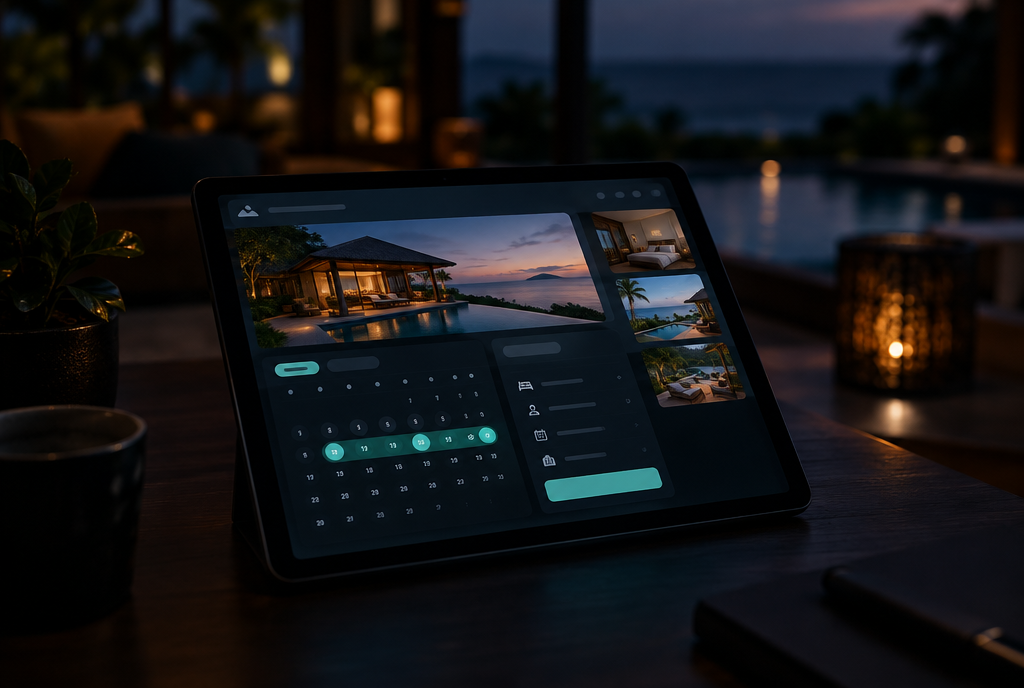
Online booking systems for villas, tour operators, service providers, and small hospitality businesses. Real-time availability, payment integration (MIPS, Stripe, PayPal), automated confirmation emails. The kind of tool that replaces a WhatsApp thread and a paper calendar.
CRMs, inventory systems, reporting dashboards, and internal tools that run inside a business. Authentication, role-based access, structured data, API integration. The software that replaces three spreadsheets, a daily phone call, and the one person who somehow knows where everything is.
AI chatbots trained on client documentation to handle English/French customer queries, OCR pipelines for invoice and ID processing, and CRM enrichment systems. Built to comply with the Mauritius Data Protection Act 2017, with options for local data hosting where sensitivity demands it.
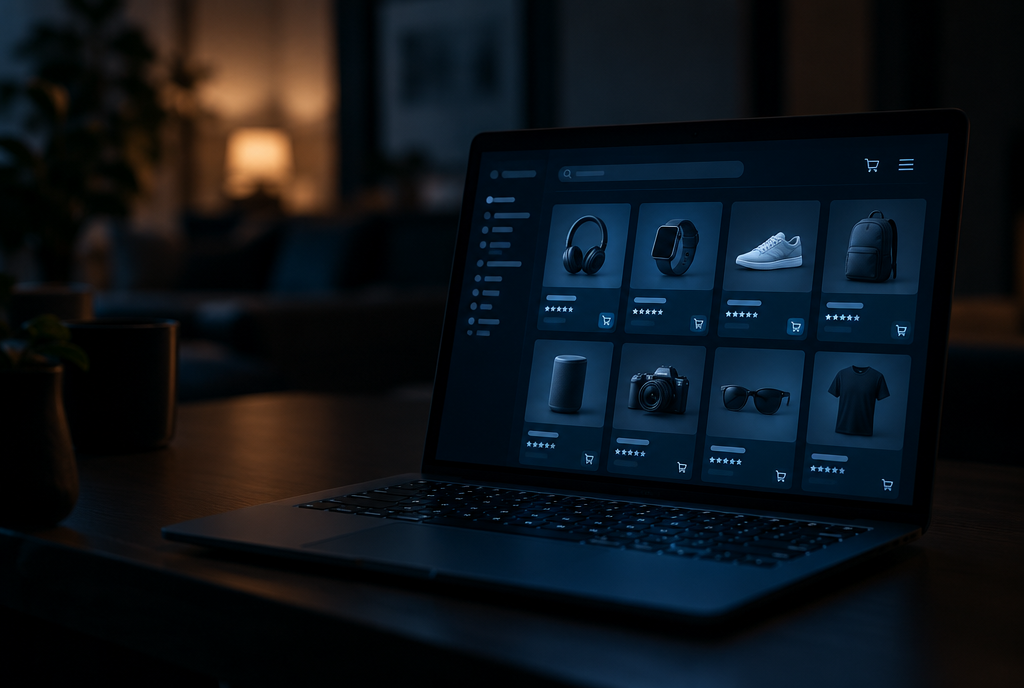
E-commerce sites with payment gateway integration, inventory sync, order management, and shipping rules. From single-product shops to multi-category catalogs, built custom when the catalog model is unusual, built on WooCommerce when it is not.
Headless CMS implementations, multi-language setups (English / French), editorial workflows, and structured content architectures. For sites that get updated weekly, not yearly, and where the content model is the product, not an afterthought.
Most engagements begin with a one-hour conversation, call, email, or in person at the studio in Cascavelle. Describe the business problem, the timeline, and the budget range. You will get an honest answer about whether the studio is the right fit, and a fixed-scope quote if it is.
Reach out directly to Christophe. Response within one business day, Mauritius time (GMT+4). For existing project support, the same contact applies: there is no separate support queue.